
.
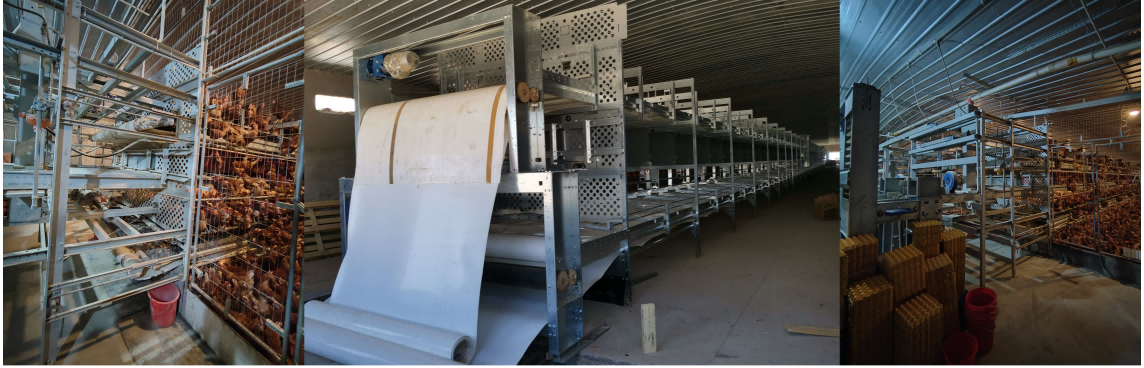
Our 3-Tier Cage-Free Aviary System is designed for commercial layer farms that need an open, automated and scalable egg-production solution. Hens are not kept in conventional cages or enclosed colony cages. Instead, they can move freely between accessible litter-floor areas, open tiers, perches, feeding lines, drinking lines and automatic community nests.
This system combines cage-free bird movement with commercial automation. It can support new layer-house construction, farm expansion and suitable cage-free conversion projects while integrating egg collection, manure handling and climate-control equipment.
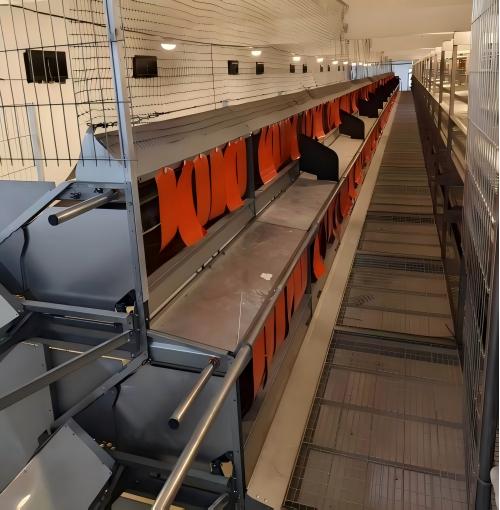
Automated Feeding and Manure Removal for Commercial Cage-Free Layer Farms
Large commercial layer farms require consistent feeding and practical manure-handling routines. Read Full Technical Details + Hide Technical Details −
In a multi-tier cage-free aviary, manual feeding and manual manure removal can become increasingly labour-intensive as flock capacity and house size grow.
Our aviary equipment can integrate automated feeding lines, nipple drinking systems and manure belts beneath designated tiers. These systems help cage-free layer farms organise routine feed distribution, water access and manure removal within the house as part of a coordinated layer-farm automation plan.
The final configuration for cage-free layer farms should be selected according to flock capacity, aviary layout, house length, manure-handling route, local climate, power supply and the farm’s daily management programme.
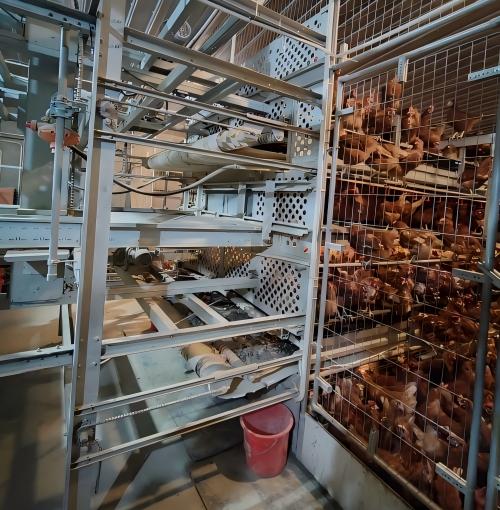
Cage-Free Aviary Project Delivery, Installation Support and Technical Service
A commercial cage-free aviary project requires clear planning, defined responsibilities and practical installation support. Read Full Technical Details + Hide Technical Details −
A commercial cage-free aviary project delivery process involves more than equipment selection. Project success depends on clear technical planning, reliable equipment configuration, defined supply responsibilities, installation readiness, commissioning procedures and practical operator support.
Before quotation and order confirmation, we work with the customer to clarify the poultry-house layout, target flock capacity, equipment scope, electrical and utility interfaces, egg-collection route, manure-handling plan, installation conditions and project schedule. This preparation helps establish the required installation support and technical coordination for each cage-free aviary project.
The agreed technical service scope may include preliminary layout discussion, equipment configuration, technical documentation, manufacturing coordination, shipment preparation, installation guidance, commissioning support and operator-training guidance.
For effective cage-free aviary project delivery, the final responsibilities for civil works, local installation labour, electrical connection, lifting equipment, local permits and site management should be clearly defined in the commercial and technical agreement.
A clearly agreed installation support plan and technical service scope help project teams coordinate site readiness, equipment interfaces, installation procedures and commissioning requirements before project implementation.
Discuss your project requirements with us to define a practical cage-free aviary project delivery plan, appropriate installation support and the required technical service scope.
Discuss Your Cage-Free Aviary Project Scope
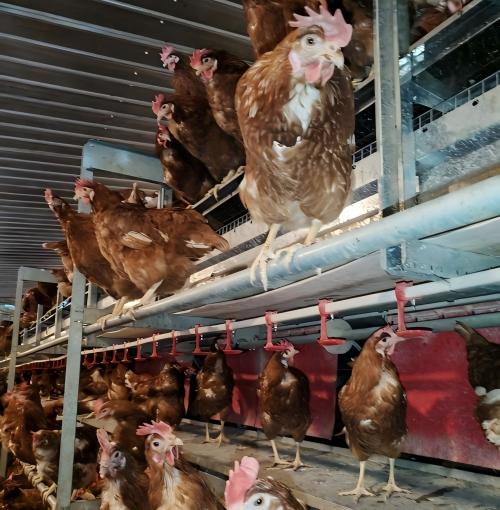
Cage-Free Aviary Design and Layer House Layout Planning for Commercial Layer Farms
Plan a cage-free aviary layout around flock capacity, house dimensions and project requirements. Read Full Technical Details + Hide Technical Details −
Moving from conventional cage housing to a cage-free production system requires more than replacing equipment. Successful cage-free aviary design must coordinate the poultry-house layout, accessible litter-floor areas, open multi-tier aviary structure, perches, automatic community nests, feeding and drinking lines, manure removal, egg collection, ventilation and service access.
Effective layer house layout planning brings together bird movement, equipment access, egg flow, manure-handling routes, ventilation and daily management requirements before equipment is finalised. This helps commercial layer farms develop an open housing system that is matched to the actual building and project scope.
For new layer farms, the aviary layout should be developed around the target flock capacity, house dimensions, internal height, local climate, egg-room location, manure-handling route, available utilities and future expansion plans. Early cage-free aviary design planning helps coordinate the poultry house, aviary rows, litter areas, nests, feeding, drinking, egg conveyors and climate-control equipment.
For existing layer farms, a cage-free conversion requires a technical review of building width, internal height, structural condition, floor condition, ventilation capacity, egg-collection route, manure route and installation access. Practical layer house layout planning should also consider service routes, maintenance access, bird movement, litter-floor access and the required equipment configuration.
The final cage-free aviary design and layer house layout planning should be reviewed against applicable local regulations, buyer requirements and project-specific welfare standards. Equipment selection must be based on verified project conditions rather than a standard layout applied to every farm.
Request a Cage-Free Aviary Layout Review
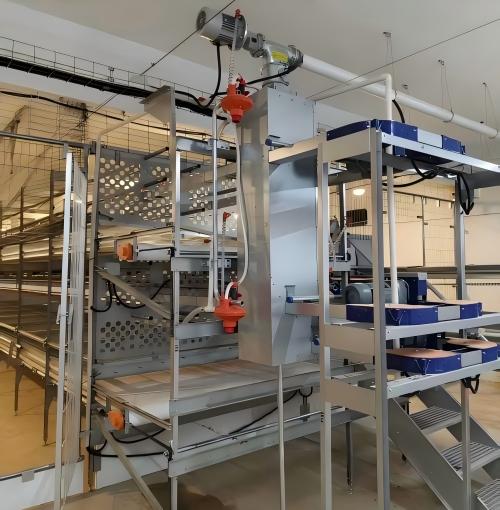
Cage-Free Aviary Design and Layer House Layout Planning for Commercial Layer Farms
Plan a cage-free aviary layout around flock capacity, house dimensions and project requirements. Read Full Technical Details + Hide Technical Details −
Moving from conventional cage housing to a cage-free production system requires more than replacing equipment. Successful cage-free aviary design must coordinate the poultry-house layout, accessible litter-floor areas, open multi-tier aviary structure, perches, automatic community nests, feeding and drinking lines, manure removal, egg collection, ventilation and service access.
Effective layer house layout planning brings together bird movement, equipment access, egg flow, manure-handling routes, ventilation and daily management requirements before equipment is finalised. This helps commercial layer farms develop an open housing system that is matched to the actual building and project scope.
For new layer farms, the aviary layout should be developed around the target flock capacity, house dimensions, internal height, local climate, egg-room location, manure-handling route, available utilities and future expansion plans. Early cage-free aviary design planning helps coordinate the poultry house, aviary rows, litter areas, nests, feeding, drinking, egg conveyors and climate-control equipment.
For existing layer farms, a cage-free conversion requires a technical review of building width, internal height, structural condition, floor condition, ventilation capacity, egg-collection route, manure route and installation access. Practical layer house layout planning should also consider service routes, maintenance access, bird movement, litter-floor access and the required equipment configuration.
The final cage-free aviary design and layer house layout planning should be reviewed against applicable local regulations, buyer requirements and project-specific welfare standards. Equipment selection must be based on verified project conditions rather than a standard layout applied to every farm.
Request a Cage-Free Aviary Layout Review
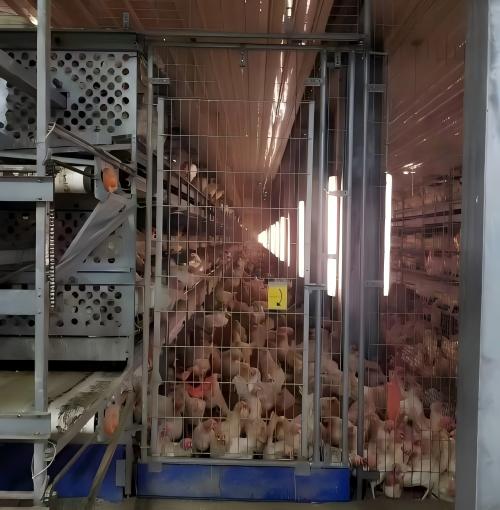
Three-Tier Open Layer Cage System for Efficient Commercial Egg Production and Layer Farm Automation
A three-tier open layer cage system for commercial egg farms requiring reliable capacity and automation. Read Full Technical Details + Hide Technical Details −
Our three-tier open layer cage system is designed for commercial egg farms that require reliable capacity, practical daily management and scalable layer farm automation. The system can be configured according to flock size, poultry-house dimensions, local climate conditions and the required level of automation.
Each project can integrate layer cages with automatic feeding, nipple drinking, egg collection, manure removal and optional environmental-control equipment. This integrated design helps commercial farms organise feeding, watering, egg handling and manure management in a more efficient egg production workflow.
A properly configured three-tier open layer cage system can combine equipment modules for feed distribution, water supply, egg collection and manure handling. The final layer farm automation scope should be selected according to bird capacity, house layout, local operating conditions and the farm’s management programme.
For commercial egg production, the project configuration may include automatic feeding lines, nipple drinking systems, egg conveyors, manure-removal equipment and environmental-control interfaces. Each three-tier open layer cage system should be planned around practical access, routine maintenance, power supply and the required level of automation.
Share your planned bird capacity, house layout, location and preferred automation level to receive a suitable three-tier open layer cage system configuration and project quotation. Our team can discuss the relevant layer farm automation modules for your commercial egg production project.
Request a Three-Tier Layer Cage Configuration and Project Quotation
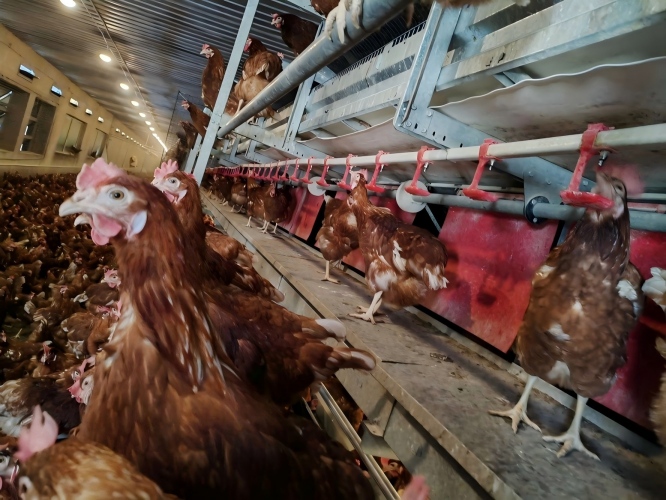
Centralized Egg Collection System and Manure Belt Removal System for Three-Tier Open Layer Houses
Centralized egg collection and manure belt removal for three-tier open layer houses. Read Full Technical Details + Hide Technical Details −
Our three-tier open layer houses can be configured with a centralized egg collection system and a manure belt removal system to support organised daily egg handling and manure management.
In a properly planned centralized egg collection system, eggs are transferred from the cage rows through the selected collection route to a designated egg-collection or receiving area. The final egg-handling arrangement should be selected according to house length, cage-row quantity, planned bird capacity, egg-room position and the required workflow for commercial three-tier open layer houses.
The manure belt removal system conveys manure from beneath each designated cage tier to the discharge end of the poultry house. Manure-transfer routes, discharge arrangements and handling procedures should be planned according to the house layout, local operating conditions, storage capacity and farm-management requirements.
The configuration of the centralized egg collection system and manure belt removal system should consider poultry-house length, number of cage rows, target bird capacity, egg-handling workflow, manure discharge arrangement and the required automation level.
Proper equipment selection, scheduled belt operation, ventilation and manure-management practices are important for practical operation in three-tier open layer houses. These factors can support routine egg handling, manure removal, moisture management and indoor air quality within the poultry house.
Send your poultry-house dimensions, cage-row quantity, target bird capacity and project requirements to discuss a suitable centralized egg collection system, manure belt removal system and layout for three-tier open layer houses.
Request an Egg Collection and Manure Belt System Layout Review
What Is a 3-Tier Cage-Free Aviary System for Commercial Layer Farms?
Our 3-tier cage-free aviary system is designed for commercial layer farms that need an open, automated and scalable egg-production solution. Hens are not kept in conventional cages or enclosed colony cages. Instead, they can move freely between accessible litter-floor areas, open tiers, perches, feeding lines, drinking lines and automatic community nests.
This cage-free aviary system combines open bird movement with commercial automation. It can support new layer-house construction, farm expansion and suitable cage-free conversion projects while integrating egg collection, manure handling and climate-control equipment for commercial layer farms.
Indoor Cage-Free Layer Housing
A cage-free aviary system is an indoor layer-housing system in which hens do not live inside individual cages or permanently enclosed bird compartments. The poultry house includes accessible litter-floor areas, elevated open tiers, perches, automatic nests, feeding systems and drinking systems. Hens can move horizontally and vertically throughout the accessible production area.
Open Multi-Level Space for Commercial Egg Production
A 3-tier cage-free aviary system uses the available height of the poultry house as well as the floor area. Instead of relying only on the ground floor, the system provides three open levels for hens to rest, feed, drink, access nests and move through the house. This supports commercial-scale cage-free egg production while making practical use of the available building volume.
The system is not an enriched cage, furnished colony cage or conventional layer cage. A cage-free aviary system has no permanent cage enclosure that restricts hens to a single compartment during normal production. This distinction is important for commercial layer farms planning open multi-level housing.
The Three Defining Characteristics
- No permanent cages: Hens are not confined in individual cages or enclosed colony compartments.
- Open-access movement: Birds can reach accessible litter-floor areas, open tiers, perches, nests, feed and water points.
- Multi-level activity: Open platforms, ramps, steps, perches and passageways help hens move between levels in a 3-tier cage-free aviary system.
For commercial layer farms, the final aviary layout should be configured according to target flock capacity, house dimensions, accessible litter-floor area, egg-handling requirements, manure-management route, climate conditions and the required level of automation.
Request a 3-Tier Cage-Free Aviary System Layout Review
A 3-tier cage-free aviary system provides open multi-level housing for commercial layer farms. Read Full Technical Details + Hide Technical Details −
Our 3-tier cage-free aviary system is designed for commercial layer farms that need an open, automated and scalable egg-production solution. Hens are not kept in conventional cages or enclosed colony cages. Instead, they can move freely between accessible litter-floor areas, open tiers, perches, feeding lines, drinking lines and automatic community nests.
This cage-free aviary system combines open bird movement with commercial automation. It can support new layer-house construction, farm expansion and suitable cage-free conversion projects while integrating egg collection, manure handling and climate-control equipment for commercial layer farms.
Indoor Cage-Free Layer Housing
A cage-free aviary system is an indoor layer-housing system in which hens do not live inside individual cages or permanently enclosed bird compartments. The poultry house includes accessible litter-floor areas, elevated open tiers, perches, automatic nests, feeding systems and drinking systems. Hens can move horizontally and vertically throughout the accessible production area.
Open Multi-Level Space for Commercial Egg Production
A 3-tier cage-free aviary system uses the available height of the poultry house as well as the floor area. Instead of relying only on the ground floor, the system provides three open levels for hens to rest, feed, drink, access nests and move through the house. This supports commercial-scale cage-free egg production while making practical use of the available building volume.
The system is not an enriched cage, furnished colony cage or conventional layer cage. A cage-free aviary system has no permanent cage enclosure that restricts hens to a single compartment during normal production. This distinction is important for commercial layer farms planning open multi-level housing.
The Three Defining Characteristics
- No permanent cages: Hens are not confined in individual cages or enclosed colony compartments.
- Open-access movement: Birds can reach accessible litter-floor areas, open tiers, perches, nests, feed and water points.
- Multi-level activity: Open platforms, ramps, steps, perches and passageways help hens move between levels in a 3-tier cage-free aviary system.
For commercial layer farms, the final aviary layout should be configured according to target flock capacity, house dimensions, accessible litter-floor area, egg-handling requirements, manure-management route, climate conditions and the required level of automation.
Request a 3-Tier Cage-Free Aviary System Layout Review
Open Aviary Bird Movement, Community Nests and Egg Collection Routes
The poultry house is designed as one integrated activity environment. Hens can use the litter floor for scratching and movement, move through the open tier structure, rest on perches, eat and drink at automated lines, and enter community nests voluntarily to lay eggs. This coordinated open aviary bird movement supports access to activity areas, feed, water, perches and laying areas within the poultry house.
Typical Bird Movement and Egg-Handling Path
Well-planned open aviary bird movement allows hens to use accessible litter-floor areas, open tiers, perches, feeding lines, drinking lines and community nests through practical movement routes. The final arrangement should be developed around the poultry-house structure and the flock-management programme.
The egg collection routes begin at the automatic nest area and can transfer eggs through nest belts, cross conveyors and a main egg conveyor to the egg room. The final egg-handling arrangement should consider house length, row layout, egg-room location, required workflow and the selected equipment scope.
The final internal layout depends on house dimensions, flock size, local climate, management system, egg collection routes and applicable welfare, buyer or regulatory requirements. The position of community nests, open tier access, service routes and equipment modules should be coordinated as part of the complete aviary plan.
Request an Open Aviary Layout and Egg Collection Route Review
Open aviary bird movement connects litter floors, tiers, perches, community nests and egg routes. Read Full Technical Details + Hide Technical Details −
The poultry house is designed as one integrated activity environment. Hens can use the litter floor for scratching and movement, move through the open tier structure, rest on perches, eat and drink at automated lines, and enter community nests voluntarily to lay eggs. This coordinated open aviary bird movement supports access to activity areas, feed, water, perches and laying areas within the poultry house.
Typical Bird Movement and Egg-Handling Path
Well-planned open aviary bird movement allows hens to use accessible litter-floor areas, open tiers, perches, feeding lines, drinking lines and community nests through practical movement routes. The final arrangement should be developed around the poultry-house structure and the flock-management programme.
The egg collection routes begin at the automatic nest area and can transfer eggs through nest belts, cross conveyors and a main egg conveyor to the egg room. The final egg-handling arrangement should consider house length, row layout, egg-room location, required workflow and the selected equipment scope.
The final internal layout depends on house dimensions, flock size, local climate, management system, egg collection routes and applicable welfare, buyer or regulatory requirements. The position of community nests, open tier access, service routes and equipment modules should be coordinated as part of the complete aviary plan.
Request an Open Aviary Layout and Egg Collection Route Review
Main Components of a 3-Tier Cage-Free Aviary System for Commercial Layer Farms
A complete 3-tier cage-free aviary system combines open housing, accessible litter-floor areas, automatic community nests, feeding and drinking equipment, manure removal and climate control. Each equipment module should be configured around the poultry-house layout, flock capacity, local climate and daily management requirements of commercial layer farms.
1. Open 3-Tier Aviary Structure
The main 3-tier cage-free aviary system structure provides open elevated levels for commercial laying hens. It can include hot-dip galvanised steel components, plastic slatted floors or suitable wire-mesh platforms, open passageways, access ramps, perches, protective rails and maintenance walkways.
The purpose of the three-tier layout is not to place birds in stacked cages. It is to create usable vertical space in an open housing environment. Hens can move between levels through planned access routes, while commercial layer farms gain productive space within the same building footprint.
2. Accessible Litter-Floor Activity Area
A 3-tier cage-free aviary system requires a bird-accessible floor area. This area is generally managed with suitable litter material, such as wood shavings, rice hulls, straw-based litter or locally approved alternatives.
The litter floor gives hens space to walk, scratch, forage and dust-bathe. Good litter management is essential. Commercial layer farms should control moisture, leaking drinkers, manure accumulation, ventilation, ammonia and floor-egg risk through suitable equipment design and daily management.
3. Automatic Community Nests and Egg Collection
Hens enter automatic community nests voluntarily to lay eggs in a dedicated and controlled area. After laying, eggs are transferred from the nest surface to an automatic egg belt, then to cross conveyors and the main egg-collection line.
Automatic community nests can support cleaner egg collection from designated nest areas, reduce labour for manual egg gathering, support continuous transfer of eggs to the egg room and connect with grading, packing and further egg-handling equipment.
Recommended product terminology includes automatic community nest, group nest system, automatic nest box and open-access laying nest. Nest location, bird access, lighting, collection routes and management procedures should be coordinated within the complete aviary layout.
4. Automated Feeding and Nipple Drinking
Feed can be transferred from a silo, hopper or feed-storage system to the poultry house through an automated distribution system. Feed lines, troughs or chain-feeding equipment are configured according to bird numbers, tier arrangement, required feeding space and the farm’s production programme.
Nipple drinking lines provide accessible water points throughout the aviary. Correct line height, water pressure, maintenance and leak prevention are especially important in a 3-tier cage-free aviary system because excess water can affect litter quality and increase operational challenges related to ammonia, hygiene and floor eggs.
5. Perches, Ramps and Access Routes
Perches provide resting and roosting space. Open platforms, ramps, steps and access routes help hens use the vertical space safely. A successful aviary design must consider more than equipment capacity: birds must be able to reach feed, water, nests, perches and litter areas without excessive crowding or difficult movement routes.
The layout should be matched to flock size, bird genetics, rearing method, house width, tier spacing and farm-management procedures. These planning factors help commercial layer farms create practical movement routes within the accessible aviary area.
6. Automatic Manure Removal
Commercial aviary systems commonly use manure belts beneath elevated tiers. Manure is removed from the house at planned intervals and can be directed to a collection, drying, composting or transport process.
The floor area also requires a separate litter and manure-management plan. Depending on the project, this can include litter turning, floor cleaning, manure alleys, scraping equipment or complete cleanout between flocks. A well-planned manure-management system supports routine handling, moisture control, labour planning, hygiene management and the environmental-management programme of commercial layer farms.
7. Climate Control and Smart Farm Management
A cage-free house must provide stable environmental conditions across the litter floor, lower tier and upper tiers. Climate-control equipment for a 3-tier cage-free aviary system can be configured according to the poultry-house design, flock capacity, local weather conditions and management requirements.
- Ventilation fans and air inlets
- Tunnel or cross-ventilation design
- Cooling pads and water systems
- Heating or insulation solutions for cold climates
- Lighting programmes and automated dimming
- Temperature, humidity and static-pressure monitoring
- Optional gas monitoring and alarm functions
- PLC or climate controller
- Power-failure, high-temperature and emergency alarms
- Backup-generator interface or power-contingency planning
Climate design must be based on local summer temperature, humidity, altitude, house orientation, insulation, stocking plan, electricity reliability and local engineering requirements. The final automation scope should be selected for the operating conditions of each commercial layer farm.
Request a 3-Tier Cage-Free Aviary System Equipment Layout Review
A 3-tier cage-free aviary system integrates open housing, automatic community nests and layer-farm equipment. Read Full Technical Details + Hide Technical Details −
A complete 3-tier cage-free aviary system combines open housing, accessible litter-floor areas, automatic community nests, feeding and drinking equipment, manure removal and climate control. Each equipment module should be configured around the poultry-house layout, flock capacity, local climate and daily management requirements of commercial layer farms.
1. Open 3-Tier Aviary Structure
The main 3-tier cage-free aviary system structure provides open elevated levels for commercial laying hens. It can include hot-dip galvanised steel components, plastic slatted floors or suitable wire-mesh platforms, open passageways, access ramps, perches, protective rails and maintenance walkways.
The purpose of the three-tier layout is not to place birds in stacked cages. It is to create usable vertical space in an open housing environment. Hens can move between levels through planned access routes, while commercial layer farms gain productive space within the same building footprint.
2. Accessible Litter-Floor Activity Area
A 3-tier cage-free aviary system requires a bird-accessible floor area. This area is generally managed with suitable litter material, such as wood shavings, rice hulls, straw-based litter or locally approved alternatives.
The litter floor gives hens space to walk, scratch, forage and dust-bathe. Good litter management is essential. Commercial layer farms should control moisture, leaking drinkers, manure accumulation, ventilation, ammonia and floor-egg risk through suitable equipment design and daily management.
3. Automatic Community Nests and Egg Collection
Hens enter automatic community nests voluntarily to lay eggs in a dedicated and controlled area. After laying, eggs are transferred from the nest surface to an automatic egg belt, then to cross conveyors and the main egg-collection line.
Automatic community nests can support cleaner egg collection from designated nest areas, reduce labour for manual egg gathering, support continuous transfer of eggs to the egg room and connect with grading, packing and further egg-handling equipment.
Recommended product terminology includes automatic community nest, group nest system, automatic nest box and open-access laying nest. Nest location, bird access, lighting, collection routes and management procedures should be coordinated within the complete aviary layout.
4. Automated Feeding and Nipple Drinking
Feed can be transferred from a silo, hopper or feed-storage system to the poultry house through an automated distribution system. Feed lines, troughs or chain-feeding equipment are configured according to bird numbers, tier arrangement, required feeding space and the farm’s production programme.
Nipple drinking lines provide accessible water points throughout the aviary. Correct line height, water pressure, maintenance and leak prevention are especially important in a 3-tier cage-free aviary system because excess water can affect litter quality and increase operational challenges related to ammonia, hygiene and floor eggs.
5. Perches, Ramps and Access Routes
Perches provide resting and roosting space. Open platforms, ramps, steps and access routes help hens use the vertical space safely. A successful aviary design must consider more than equipment capacity: birds must be able to reach feed, water, nests, perches and litter areas without excessive crowding or difficult movement routes.
The layout should be matched to flock size, bird genetics, rearing method, house width, tier spacing and farm-management procedures. These planning factors help commercial layer farms create practical movement routes within the accessible aviary area.
6. Automatic Manure Removal
Commercial aviary systems commonly use manure belts beneath elevated tiers. Manure is removed from the house at planned intervals and can be directed to a collection, drying, composting or transport process.
The floor area also requires a separate litter and manure-management plan. Depending on the project, this can include litter turning, floor cleaning, manure alleys, scraping equipment or complete cleanout between flocks. A well-planned manure-management system supports routine handling, moisture control, labour planning, hygiene management and the environmental-management programme of commercial layer farms.
7. Climate Control and Smart Farm Management
A cage-free house must provide stable environmental conditions across the litter floor, lower tier and upper tiers. Climate-control equipment for a 3-tier cage-free aviary system can be configured according to the poultry-house design, flock capacity, local weather conditions and management requirements.
- Ventilation fans and air inlets
- Tunnel or cross-ventilation design
- Cooling pads and water systems
- Heating or insulation solutions for cold climates
- Lighting programmes and automated dimming
- Temperature, humidity and static-pressure monitoring
- Optional gas monitoring and alarm functions
- PLC or climate controller
- Power-failure, high-temperature and emergency alarms
- Backup-generator interface or power-contingency planning
Climate design must be based on local summer temperature, humidity, altitude, house orientation, insulation, stocking plan, electricity reliability and local engineering requirements. The final automation scope should be selected for the operating conditions of each commercial layer farm.
Request a 3-Tier Cage-Free Aviary System Equipment Layout Review



 Spanish
 العربية
 Português
 Français
 Russian
 Indonesia
 Urdu
Urdu
 Hindi
Hindi
 Bengali
 中文
中文
 日本語
日本語
 한국어
한국어